PreviewsIssue 87, Fall/Winter 2025/26
-

Into the D/ark
David Elias
It’s the fall of 1963, and the assassination of John F. Kennedy is seeping into the surreal happenings of small-town southern Manitoba. Clarence Martens, a blacksmith, has turned to creating abstract sculptures, while his wife Rose deals with the aftermath of a fire that left their two sons, Jake and Cornie, disfigured; Martha’s preacher brother Abe has abandoned his congregation to devote himself to making “The Ark”; and Martha is overcome by truths she cannot tell and feelings she must suppress. This all comes to a dramatic climax with the first big snowfall of the year.
-
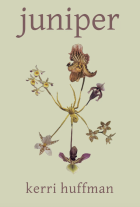
Juniper
Kerri Huffman
In images as delicate and impermanent as blooming flowers and burning candles, the speaker chronicles how a friendship permeated by addictions begins and ends, in subtle yet heartbreaking poems that revisit old haunts and summon her former friend’s presence in new places, that honour, question, and elegize.
-

Kihiani
A Memoir of Healing
Susan Aglukark, Andrea Warner
Honest and moving, this uplifting story of Aglukark’s life – from her birth in Fort Churchill, Manitoba, to her childhood in Arviat and Rankin Inlet on the shore of Hudson Bay, to her move from her community and her artistic career – reveals the trauma and the healing that she experienced on her way to discovering her Inuk self.
-
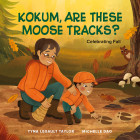
Kokum, Are These Moose Tracks?
Celebrating Fall
Tyna Legault Taylor, Michelle Dao (Illustrator), Theresa Okimaw-Hall (Translator)
The latest in the Joshua Learns from the Land series follows Joshua and his Kokum as they go moose hunting in the fall, learning about various kinds of animal tracks (red fox, wolf, black bear, and cow, calf, and bull moose). The book includes both Swampy Cree and Anishinaabemowin words and a glossary/pronunciation guide, as well as a recipe for moose meat stew and dumplings.
-
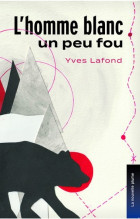
L’homme blanc un peu fou
Yves Lafond
L’histoire de cet homme sans âge rencontré sur le train serait un cercle, maintes fois répété, comme les anneaux de croissance d’un conifère mature, ou l’œil rond et luisant du saumon qui remonte la rivière pour donner la vie et mourir. Il a raconté ses vies et ses morts, ses réussites et ses erreurs, les noms et les visages qu’il a portés parmi les gens, de ville en village, de route en rivière. Il a décrit l’amitié des bêtes sauvages. Il a appris comment changer de vie en restant le même, et comment fuir au bout du monde en restant toujours sur place. The story of this ageless man met on the train is like a circle, repeated over and over, like the growth rings of a mature conifer, or the round, shiny eye of a salmon swimming upstream to give life and die. He tells about his lives and deaths, his successes and mistakes, the names and faces he wore among people, from town to village, from road to river. He described the friendship of wild animals. He taught how to change one’s life while remaining the same, and how to flee to the ends of the earth while always staying in the same place.
-

Lawless
Abortion under Complete Decriminalization
Martha Paynter
Paynter clearly and accessibly explains legal definitions to do with abortion, and describes how, despite complete decriminalization in Canada, barriers persist; how policy, practice, and human rights affect abortion delivery; and how to resolve challenges through practical and compassionate improvements to care provision.
-
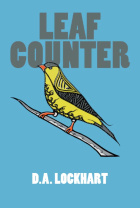
Leaf Counter
D. A. Lockhart
Lockhart brings an Indigenous perspective to the colonial and Loyalist history and poetic mythology of Prince Edward County and Al Purdy’s A-frame home, which currently serves as a writer’s residency. The poems weave stories of 19th-century soldiers and politicians with traditional stories of Sky Woman, contrast the song of the goldfinch (the titular Leaf Counter) with constant military planes flying overhead, and draw on Purdy’s correspondence and work.
-
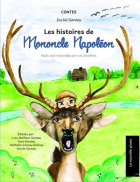
Les histoires de Mononcle Napoléon
Euclid Gareau
Pionnier de l’Ouest canadien, ce légendaire Mononcle Napoléon vit des aventures palpitantes, à la fois réalistes et farfelues, marquées de chance, de malchance et d’ingéniosité. Quatre contes fabuleux incorporent un côté ludique, suscitent l’imagination et l’émotion des lecteurs et des auditeurs tout en jetant un regard sur l’histoire de l’Ouest canadien du XIXe siècle et le langage de nos ancêtres. The legendary Uncle Napoleon, a pioneer of Western Canada, experiences thrilling adventures, both realistic and far-fetched, marked by luck, misfortune, and ingenuity. Four fabulous tales incorporate a playful side, spark the imagination and emotions of readers and listeners while offering a glimpse into the history of 19th-century Western Canada and the language of our ancestors.
-

Les vieux péteux avec Bon débarras
Madeleine Blais-Dahlem
Deux pièces au sujet du grand âge. Les vieux péteux présente trois vieillards sirotant leur café quotidien, tout en grattant leurs billets de loterie et s’interrogeant sur la nature du hazard. Bon débarras met en scène un couple ainé qui a pris la decision de quitter leur village pour rentrer en ville où ils seront plus près de leur petits-enfants et des soins médicaux. These two stage plays about growing old include Les vieux péteux, which features three old men sipping their daily coffee while scratching their lottery tickets and wondering about the nature of luck; and Bon débarras, in which an older couple decides to move back to the city where they will be closer to their grandchildren and medical care.
-

Lessons from the Zapatistas
From Armed Insurgency to People’s Autonomy
Lia Pinheiro Barbosa, Peter M. Rosset, Henry Veltmeyer (Translator), Peter M. Rosset (Translator)
This up-to-date history of the Zapatista movement of Mayan people in Chiapas, Mexico, provides an in-depth analysis of their revolutionary thought and political theory, attending to the prominent role of women, their practice of social autonomy, and their experiments in education, self-government, and alternative economic development.