PreviewsIssue 87, Fall/Winter 2025/26
-
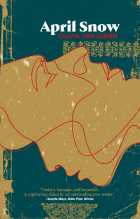
April Snow
Olivia Van Guinn
This noirish debut novel explores the idea of soulmates in the story of Edward Montgomery and Fay Burgess, who were inseparable throughout their childhood and adolescence, and vowed to be together forever. When Ed went away to law school, he broke Fay’s heart, and returned to find Hillsborough a different place, and Fay on the other side of the law – but even as arch-enemies, the two cannot let each other go.
-
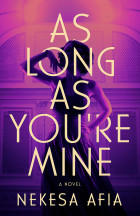
As Long as You’re Mine
A Novel
Nekesa Afia
Set in Hollywood in two timelines, 1934 and 1954, this novel follows the two women movie star Tommy Ross loved most – his daughter, Thea, who is left with more questions than answers when he dies suddenly, apparently by suicide, and his lover, Lorelei Davies, who also died apparently by suicide 20 years earlier. Thea teams up with gossip reporter Amy Evans to find out the truth about their deaths and their relationship and her inheritance.
-
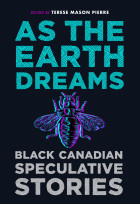
As the Earth Dreams
Black Canadian Speculative Stories
Terese Mason Pierre (Editor)
Ten haunting stories by contemporary Black Canadian writers such as francesca ekwuyasi, Zalika Reid-Benta, Terese Mason Pierre, and Calgary-based Chimedum Ohaegbu explore natural and urban landscapes, life and death and the in-between state, economic disaster, love, and more, all while celebrating the ever-changing self and envisioning uplifting Black futures.
-
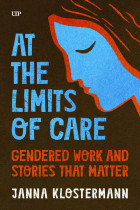
At the Limits of Care
Gendered Work and Stories That Matter
Janna Klostermann
After sharing her personal experience of working in care and being subsumed by it, Klostermann takes a story-based approach to life history research, analyzing the experiences of 12 diverse care workers and former care workers to learn how gendered care work is organized in inequitable and unsustainable ways that can be difficult to leave, and how care work can be imagined in other ways, ways where workers and organizations set limits and boundaries, and where care-related responsibilities are renegotiated, and gendered meanings and expectations are rethought.
-

Baseball Bats for Christmas
Michael Arvaarluk Kusugak, Coco Lynge (Illustrator)
This 35th anniversary edition of a holiday classic brings to life the story of Arvaarluk and his friends, who discover Christmas trees for the first time in 1955, with stunning new illustrations.
-

Beaver Hills Forever
A Metis Poetic Novella
Conor Kerr
This playful, yet hard-hitting novella follows Buddy, a welder in the oil fields; Baby Momma, the mother of his four children, who is trying to go back to school; Fancy University Boy, who begins but drops out of university, and then works in a warehouse supplying oil industry parts; and Aunty Prof, an untenured prof of Indigenous lit – each life showing the limitations of paths available to Métis people on the Prairies, and the determination these characters have to make something of themselves.
-
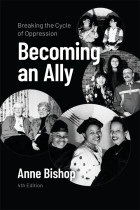
Becoming an Ally, 4th Edition
Breaking the Cycle of Oppression
Anne Bishop
This updated guide for social workers, teachers, medical professionals, policy makers, and anyone who wants to understand the origins of oppressive societies and build fair alternatives explains what structural oppression is, its impact on individuals, organizations, and cultures, and how people can work together toward equity.
-

Behind the Bricks
The Life and Times of the Mohawk Institute, Canada’s Longest-Running Residential School
Richard W. Hill Sr., Alison Norman, Thomas Peace, Jennifer Pettit
Conceived of and overseen by Six Nations community member Richard W. Hill Sr., this important work provides deep insight into the Mohawk Institute, which operated from 1828 to 1970 in Brantford, Ontario, and which was seen as a model for the residential school system.
-

Blood Letters
Ariel Gordon, GMB Chomichuk, GMB Chomichuk (Illustrator)
This innovative, illustrated, epistolary novel made up of military records, letters, poems, drawings, and maps, is set in a futuristic war with flesh-eating fog and robotic monstrosities. Siblings Kris, Albany, and Millie write letters to each other about their roles in the war – Kris (a poet) is in special ops, Albany (an artist) is a soldier at the front, and Millie (a mathematical genius) is a code worker behind the lines, where she tries to protect the others from the worst of the war.
-

Bloodied Bodies, Bloody Landscapes
Settler Colonialism in Horror
Laura Hall
This book analyzes how horror films reveal the brutality of settler colonial violence, showing the connections between horror tropes such as the savage killer and the feral woman to Indigenous representations, gender, and sexuality, and how Indigenous Peoples as presented as savage threats to civilization rather than as the ones continually under the oppression of colonialism.