“I’ve always been a fan of young adult books,” says Amy Lynn Farrell, an educator and author originally from Thunder Bay but now based in Winnipeg.

- The Moth Dreamer
- Amy Lynn Farrell
- Portage & Main Press
- $17.95 Paperback, 272 pages
- ISBN: 978-17-74921-61-6
“In young adult [as a genre], I write differently than I do in adult. Namely, I see the differences in how the relationships are evoked, the severity of violence or horror, and in including more adult-level themes.”
The Moth Dreamer, Farrell’s first novel, is a coming-of-age tale that centres on sixteen-year-old Aubrey. As if navigating high school isn’t enough, Aubrey suffers a devastating loss when her cousin, Saagaate, dies in an accident while the family is at their cabin, an accident of which Aubrey had a vision just before it happened.
Consumed with guilt over her cousin’s death, and unable to share those feelings because she doesn’t think anyone will believe her, Aubrey becomes plagued by dreams in which a mysterious man with long, dark hair approaches Aubrey. He is strangely alluring and yet also emanates a darkness. It’s not clear if this man means Aubrey harm or is a kind of warning.
As an educator, Farrell has a great deal of trust in young readers to understand complex themes and to accept being challenged by the stories they read. “Young readers are very adept at picking up on imagery, symbolism, and a variety of themes; I can be subtle with those and they’ll see it.”
The supernatural elements in the novel draw from darker genres. “I love horror – but the spooky kind of horror, not the gore horror,” Farrell says.
“I’m fascinated by how strong the feelings of fear and mystery unfold in a story – and the thrill that comes with them. And, for me, it is often in exploring and visiting the unknown that I am drawn to find out what happens and what deeper meanings might come by the ending.”
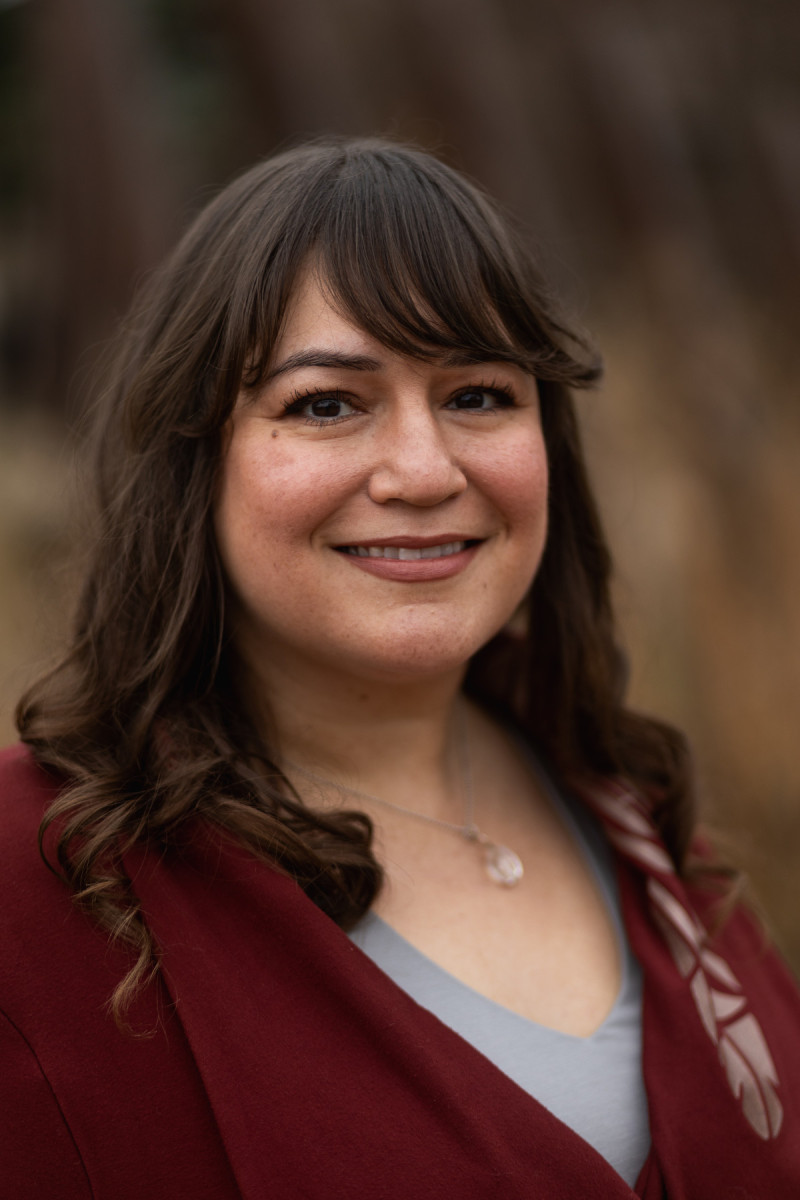
Having blended ancestry herself, Farrell gives her protagonist the same background, allowing her to explore navigating two different cultural worlds.
“Aubrey is both Indigenous and non-Indigenous. I deliberately gave her the same cultural background as myself so that I could accurately present both parts of her culture, family dynamics, and even her reaction to things happening around and to her.”
The novel doesn’t shy away from the complexity of living between cultures. Aubrey experiences positive teachings and support from her Indigenous culture, as well as racism and bullying because of it.
Farrell expects, too, that her readers will come to the novel with their own backgrounds and that their interpretations of the story will be different.
“I also know that every reader will see and understand something differently, that in a given scene there can be multiple perspectives – and this is absolutely okay, I expect it, and is as it should be.”
Farrell has trust in her readers to take in the themes of the story.
“I hope readers will find a sense of that pull that opens us to the possibilities of the unknown,” she says. “That readers will see Aubrey, an Anishinaabe girl, drawing on the strengths of her culture to see her through to the end.”