Red Deer–based author C. J. Lavigne’s latest work, The Drowned Man’s Daughter, is a novella that occupies the intersection of fantasy, science fiction, and horror. It is also the first title in NeWest Press’s new Barbour Books speculative fiction imprint.
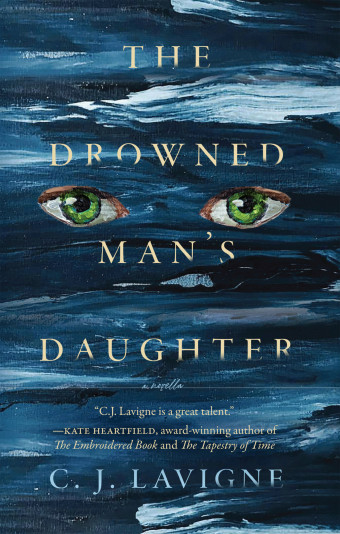
- The Drowned Man’s Daughter
- C.J. Lavigne
- NeWest Press
- $23.95 Paperback, 176 pages
- ISBN: 978-1-77439-120-4
“I started with the idea of a post-apocalyptic beach and the girl who lived on it,” Lavigne says.
That girl on the beach is Naia, found there as a baby by a small group of people surviving on an island. Needing something to believe in, the community builds a legend around her, turning her into a sea goddess with powers she doesn’t have.
“I was trying explore the particular discomfort that comes from navigating relationships with people who only see you as an accessory to their own lives – people who like you because of what they think you can do for them, or people who refuse to see that you are changing because they only see whomever they still think you are,” says Lavigne.
“Naia is doing her best to come into her own when she’s surrounded by expectations.”
Naia’s singular voice was, from the beginning, central to the story, a realization Lavigne found through experimenting. “I toyed with different versions; I tried it in third person, for example, but nothing else read quite right. Her voice was the voice of this story.”
Lavigne’s attention to language is also instrumental to establishing the post-apocalyptic setting. “There are elements of contemporary Western culture that have seeped through to Naia’s world – everything from the remnants of the research station to people’s names to the memory of birds to the vocabulary she uses,” she explains.
“I tried to keep it subtle, but I wanted to litter her language with allusions to things common to us that she wouldn’t know first-hand – the implication being that these phrases and comparisons have survived from some other time.”
The novella’s ending, in which Naia tries in three different ways to conclude the story she’s telling, draws attention to the nature of storytelling itself and what a reader or listener demands of the storyteller.

“She’s not narrating her life to get to any particular moral or practical destination, so there’s that element of ‘okay, what are you looking for here?’ that calls attention to the reader’s expectations and desires and the contrivances of any story,” says Lavigne.
The ending also highlights Lavigne’s affinity for what she calls “non-linear or time-skippy narratives”: “The Drowned Man’s Daughter uses both past and present tense in different scenes, and at the very end, Naia veers into future tense. The grammar she uses situates her within the story, so that raises a question, too – where is she standing when she speaks?”
The questions and themes that animate the novella go beyond Naia’s “personal tunnel vision of her life and her experiences in the world.” Lavigne says, “The stories we create are inevitably inflected, deliberately or not, by the experiences and truths we ourselves know.
“This book is absolutely my climate grief dipped in pandemic angst; the environmental devastation we see glimpses of was always foundational to the story, but the fact that I was writing during the early years of COVID-19 definitely contributed to threads of loneliness and vulnerability.”