“Storytelling is a very Lebanese way to deal with often traumatic memories and realities,” says Lebanese Canadian author Dania Idriss about her urgent and visceral debut short fiction collection, Tales of the Mountains and the Sea.
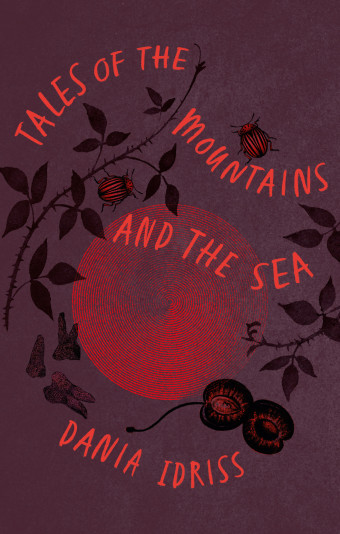
- Tales of the Mountains and the Sea
- Dania Idriss
- Freehand Books
- $22.95 Paperback, 160 pages
- ISBN: 978-19-97534-17-4
Idriss is currently a doctoral student in the English department at the University of Calgary. She first wrote this collection as her master’s thesis.
Each of the five stories is deeply rooted in Idriss’s culture and history. “I know the issues I address aren’t unique to Lebanon,” she says.
“However, as a Lebanese Muslim woman, that is the perspective I have when trying to work through issues of gender, sexuality, and colonialism.”
The stories feature marginalized young women at important moments in Lebanon’s history. In “The Brass Bowl,” the teenage protagonist struggles amid the aftermath of giving birth to a child out of wedlock.
In mourning her grandmother, the young heroine in “The Muslin Shroud” is convinced that her grandmother’s spirit has invaded her body. Amid the backdrop of civil war, the young woman in “What We Do When No One Is Watching” fears that her younger brother is getting involved with the wrong crowd.
According to Idriss, all the stories are autobiographical to some extent.
“A lot of the tales draw on oral folk stories and memories I heard growing up,” she says. “They are conglomerations of some real people and events from my family. However, none of the characters is one person, though they take interesting bits from lots of people.”
In addition, the tales include paranormal elements, for Idriss’s favourite genre is speculative fiction.
“The politics and histories of the Middle East are so heavy, and I began unpacking those dense topics through fiction,” she says. “I had a hard time finding the combination of social commentary and speculative fiction that I loved seeing in South American lit, so I wrote what I most wanted to read.”

In terms of her protagonists, Idriss is most drawn to Dab’a from “A Pouch of Hair and Bone” and Huda from “The Muslin Shroud.”
“Huda is a lot like me personality-wise – quiet and outwardly obedient, but always anxious and scheming,” she says. “Dab’a is my favourite character – I love a feral child.”
Idriss notes that her family moved to Canada near the end of the Lebanese civil war; however, they never actually talk about the war. “Family members will drop little pieces of lore while telling stories about something else entirely,” she says. “These are often funny stories about their childhoods with the war constantly raging at the periphery.”
Idriss wrote these stories because she felt compelled to, and she hopes they will hold some meaning for readers.
“I want people to view us Arabs as complex human beings,” she emphasizes. “I also want people to think critically and empathetically about the conflicts in the Middle East that dominate Western news cycles.”
On a final note, Idriss says, “I would like to convey that Arabs, specifically Arab women, have agency and individuality.”