Toronto poet Kevin Irie credits Joy Kogawa as an inspiration for his seventh collection, Evacuations, about the internment of Japanese Canadians during the Second World War.

- Evacuations
- Kevin Irie
- University of Alberta Press
- $19.99 Paperback, 100 pages
- ISBN: 978-17-72128-53-6
“Rereading her poems about the internment struck me more forcibly now because so many who were interned, including family and their friends, have passed away,” he says.
“The fact that Kogawa’s family and mine were interned at Slocan, British Columbia, always made her novel Obasan and her poems feel much more personal to me. I grew up hearing about those places.”
Evacuations begins with “On Reading Joy Kogawa,” an homage to Kogawa’s “What Do I Remember of the Evacuation,” which recalls a child’s-eye view of evacuation and the cruel, inexplicable acts of racism that the adults in her life try but fail to fully shelter her from.
In Irie’s poem, those who experienced evacuation first-hand, including his own parents, are growing old and passing away, while racist taunts on the streets of contemporary Toronto are signs of the enduring afterlives and reverberations of internment.
The title of the next poem, “What Do I Remember (Hearing) of the Evacuation,” another homage, suggests that the remembering/hearing documented in Evacuations is a combination of family history, research and research-creation, and lived experience.
The poems in Evacuations take a variety of forms; as Irie describes, “The lyric poems show the personal human cost of the sweeping government edicts in the erasure poems.”
Irie uses evacuation as a method to make erasure poems influenced by Kogawa and queer Nisga’a writer Jordan Abel.
“When Abel’s Injun won the Griffin Poetry Prize, the jury cited how he evacuates original texts, but for me, the word evacuate recalls Kogawa’s poem,” Irie says.
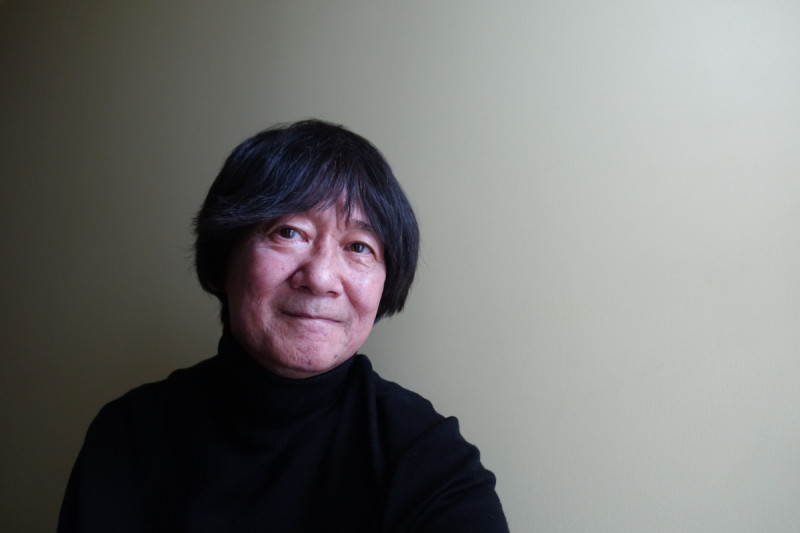
Racist government source texts are exposed, subverted, and transformed in several poems that move between “evacuation” and “official version,” or “whitewash” and “blackout.” Evacuations of shocking government edicts from the 1940s are followed by a series using contemporary sources about so-called invasive plant species.
“While researching what kind of food the internees ate while interned in the Rockies, I looked up the local vegetation, and I realized how the botanical description of invasive species in B.C. used the same phrases and terminology that were applied to Japanese Canadians at that time,” Irie explains.
These erasure-evacuations become linked to other evacuations in the lyric poems, like the wooden chain in “A Carving from Solsqua Road Camp, 1942” (“my father’s concrete poem”) made in a forced-labour work camp (“a place he never mentioned”).
The effect of Irie’s tender, historical, and all-too-timely poems is gutting, revealing both the indignity of being called an “Enemy Alien” in one’s own home and the persistent racism and anti-migrant sentiment in Canada today.
The law forbidding Japanese Canadians from returning to coastal British Columbia and compelling them to choose between deportation and moving “East of the Rockies” was, as Irie notes, “a government law that affected generations. It explains why I was born in Toronto, not Vancouver. Growing up, I used to wonder why all Japanese Canadians in Toronto seemed to know each other. They had all come through the internment.
“They knew what no other group of Canadians had to know, and hopefully, never will.”