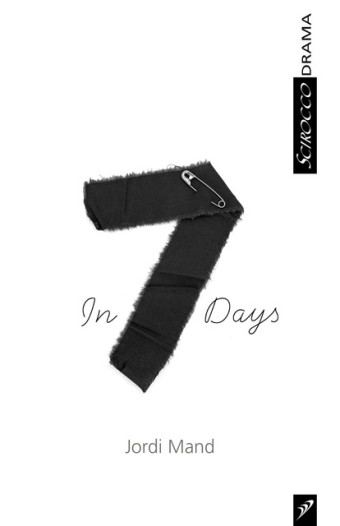
In her foreword to Trident Moon, Nina Lee Aquino, the director of the play’s 2025 Canadian premiere co-production by Crow’s Theatre and National Arts Centre, English Theatre, presents the following proverb: “Until the lion finds a storyteller, the hunter will always be the hero.”

- Trident Moon
- Anusree Roy
- J. Gordon Shillingford Publishing
- $18.95 Paperback, 124 pages
- ISBN: 978-19-90738-88-3
Toronto-based playwright Anusree Roy concurs, saying, “So much of history is explored through the male gaze, the hunter, that it’s finally time to hear the other side. The side of the hunted.”
Trident Moon is an intense, unrelenting drama set during the 1947 partition of India. It involves two pairs of women, each pair with one young daughter. The Hindu group have abducted the Muslim group and have them captive in a coal truck travelling from the newly created, mostly Muslim, Pakistan to the “new,” mostly Hindu and Sikh, India.
The play examines ideas of survival, revenge, women’s experience, and shared humanity, amid extreme violence. “Most of the play explores the theme of survival,” says Roy. “I love exploring the female gaze, female rage, motherhood, and the complexities of being a woman.”
The 90-minute play highlights the experiences of the women caught in the violence. The cramped coal truck is a significant physical setting. “I wanted the characters to be trapped as much as possible,” Roy explains.
“But, I also wanted the truck to be moving – with no way out. This was important to me because I wanted to bring the women together while they kept travelling.”
Written over a decade ago, the play was first produced in 2016 at London’s Finborough Theatre, and in 2018, it was a finalist for the Susan Smith Blackburn Prize. Yet, as Roy says, “getting a production in Canada was really difficult. But, I held onto hope, and I am so glad I did. Crow’s and NAC have been incredible producing partners.”
Part of the reason for the delay on the part of Canadian theatres may have been the violence that Roy deemed necessary and refused to soften.
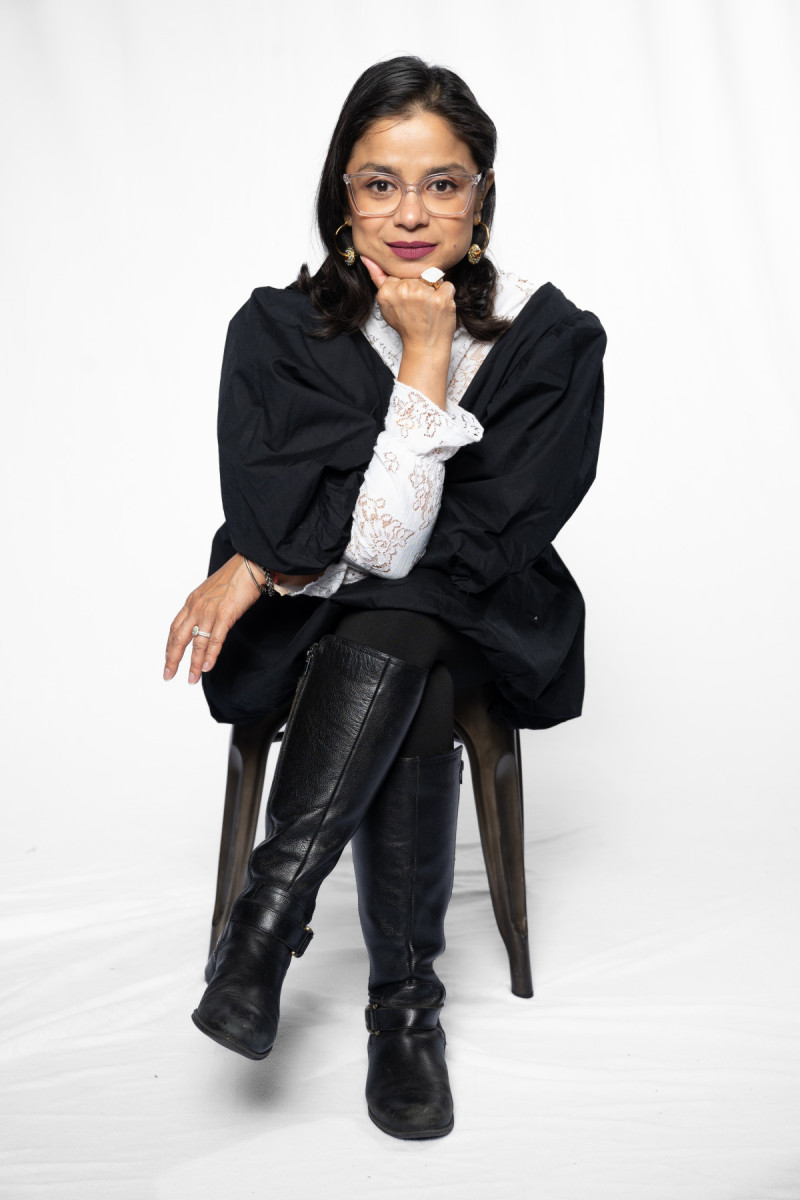
“I included the conflict/violence in the play because that is the reality of what women and children faced during the partition,” she explains. “It was important to me to tell the truth. It was important to me not to shy away from the horrors that the survivors faced. It was important to me to present it plainly and honestly without any ornamentation.”
The play was, as director Aquino says, “ahead of its time.” But now seems to be the perfect moment for it to be seen and read.
“Given the horrific political turmoil we are currently in, the play feels deeply relevant at the moment,” says Roy. “What women and children are continuing to experience is very similar to what the characters in the play are navigating. History is repeating itself!”
By the end of the play, while there is a sense of hope in the shared humanity that the characters experience, Roy also makes sure the characters are telling the audience to pay attention to the world around them.
“Hence, the last line is Wake up, wake up, wake up. I want to talk to the audience and invite them to see what’s around them, to wake up.”